Reviewing the Ready for Seventh Grade SVG Cut File
As a designer who spends more time staring at stitch simulations than I care to admit, I approach every new digital asset with a mix of curiosity and skepticism. We have all been there: you download a cute graphic, load it into your software, and realize halfway through digitizing that the lines are too close together or the shapes are too complex for clean embroidery. That is why evaluating a file like the Ready for Seventh Grade SVG Cut File requires looking past the preview image and thinking about how it actually behaves on fabric.
This particular design falls squarely into the Crafts and Graphics categories, but its utility depends entirely on how well it translates from a vector path to a stitched reality. For small business owners, Etsy sellers, and hobbyists, the difference between a bestseller and a return request often comes down to these technical nuances. Let’s break down how this file performs in real-world scenarios.
First Impressions and Visual Personality
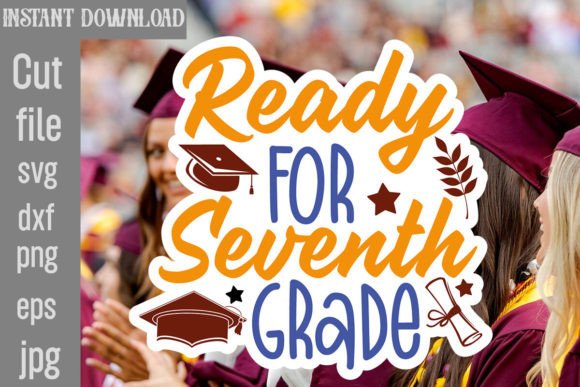
The first thing I noticed about the Ready for Seventh Grade SVG Cut File is its balanced layout. It carries a mood that is both celebratory and transitional, capturing that specific excitement of moving up a grade level. The shapes are bold enough to be readable from a distance, which is crucial for apparel like sweatshirts or tote bags. However, as an embroidery professional, I immediately look for potential trouble spots. Are there tiny details that will get lost in a satin stitch? Are the curves smooth enough to avoid jagged edges when stitched out?
The visual personality here is clean and modern. It does not rely on excessive ornamentation, which is a good sign for embroidery. Overly complex graphics often require high stitch densities that can puckering lightweight fabrics. This design seems to prioritize clarity, making it a strong candidate for a variety of applications, from personalized gifts to boutique merchandise.
Real-World Application: The Custom Sweatshirt Test
To truly test a design, you have to imagine it on a finished product. I pictured this file being used for a custom embroidered sweatshirt for a student heading back to school. This is a classic use case for a machine embroidery design of this nature. The bold lines of the Ready for Seventh Grade SVG Cut File would hold up well against the textured surface of fleece or cotton blend fabric.
When working on custom apparel, especially for growing kids, durability is key. A design that looks good on day one but unravels after three washes is a liability for any craft business. Because this file includes vector formats like EPS and SVG, it allows for precise scaling. I could resize it to fit perfectly on the chest of a youth-sized hoodie without losing definition. The included PNG file with a transparent background is also handy for creating quick printable mockups for your online store before you even thread the needle.
Beyond Apparel: Totes, Patches, and Home Decor
While apparel is the obvious choice, do not limit yourself. This design works exceptionally well as a tote bag design. Canvas bags provide a stable, tight weave that supports higher stitch densities without distortion. Imagine stitching this onto a natural canvas tote as a back-to-school essential. It adds value to a simple item, turning it into a functional piece of art.
Another excellent application is the embroidered patch. Patches are trending heavily among handmade shop owners because they are versatile and easy to ship. By stitching the Ready for Seventh Grade SVG Cut File onto twill or felt and adding a merrowed edge, you create a durable accessory that can be ironed onto jackets, backpacks, or hats. This expands your product line without requiring you to embroider directly onto difficult garments like caps.
Technical Considerations for Embroiderers
Now, let’s talk about the nitty-gritty. Since this is a DIGITAL DOWNLOAD ONLY product, you are responsible for the digitizing process unless you are using it strictly for cutting. The package includes SVG, DXF, EPS, and PNG files. If you are an embroiderer, you will likely import the SVG or EPS into your digitizing software to convert it into an embroidery file format compatible with your machine.
Here are my practical notes for handling this design:
- Stitch Density and Underlay: When converting this graphic, pay attention to the stitch density. For larger areas, consider using a fill stitch with appropriate underlay to prevent sinking into plush fabrics like towels or fleece.
- Small Details: Inspect any thin lines or small text elements. If they are narrower than 3mm, they may need to be converted to a running stitch or a narrow satin stitch to ensure they do not become bulky or break easily.
- Fabric Texture: Always test on scrap fabric first. The way the design looks on smooth cotton will differ significantly from how it appears on a textured linen or a stretchy jersey knit.
- Stabilizer Selection: Use a cut-away stabilizer for garments that will be washed frequently, such as t-shirts and sweatshirts. For woven items like tote bags or pillow covers, a tear-away might suffice, but cut-away offers better long-term stability.
Navigating Potential Challenges
No design is perfect for every situation. There are specific scenarios where you should use caution with the Ready for Seventh Grade SVG Cut File. For instance, if you are planning to embroider on dark fabric, you must consider thread color contrast. Light threads on dark fabric can sometimes show gaps in the stitching if the density is not high enough. Conversely, dark threads on light fabric can cast shadows if the underlay is too dense.
Curved surfaces present another challenge. If you intend to put this design on a cap, remember that the hoop size and the curvature of the hat will distort the image. You may need to adjust the pull compensation in your digitizing software to account for the fabric stretching around the curve. Additionally, avoid placing large, dense designs on thin or stretchy fabrics without proper stabilization, as this can lead to puckering and an unprofessional finish.
Value for Small Business Owners and Makers
For Etsy sellers and creative entrepreneurs, the quality of your design assets directly impacts your brand consistency and customer trust. A clean, well-proportioned design like this one enhances the perceived value of your handmade product. It signals professionalism and attention to detail. When customers see a crisp, well-stitched design, they are more likely to leave positive reviews and return for future purchases.
Moreover, the versatility of this file allows for diverse marketing strategies. You can use the PNG file for social media graphics, the SVG for print-on-demand previews, and the actual embroidered version for physical product listings. This multi-format approach saves time and ensures your branding looks cohesive across all platforms.
Final Verdict and Practical Advice
The Ready for Seventh Grade SVG Cut File is a solid addition to your library of design assets. It is not just a cute graphic; it is a practical tool for creating meaningful, personalized items. Whether you are making a holiday embroidery gift, a baby embroidery keepsake, or a commercial embroidery run for a local school, this design holds up under scrutiny.
Before you start your next embroidery project, remember to check the licensing terms provided with your download. While most SVG bundles allow for commercial use of finished physical products, it is always wise to confirm whether you can sell the digital file itself or if it is for personal and finished goods only. Confirming these details protects your business and ensures you are operating within legal boundaries.
In conclusion, this file offers a great balance of aesthetic appeal and technical feasibility. With proper digitizing and material selection, it can elevate your small shop product lineup and delight your customers. Treat it with the care it deserves, test it thoroughly, and watch it become a staple in your seasonal offerings.