Review: Ocean Air and Salty Hair SVG for Embroidery
As a designer who spends half my life digitizing files and the other half stitching them out, I have learned to look past the glossy mockups. We all know that what looks crisp on a screen does not always translate cleanly to fabric. When I first pulled up the Ocean Air and Salty Hair SVG Cut File, my initial reaction was one of cautious optimism. The summer theme is perennial, but execution is everything. This isn’t just about having a cute phrase; it is about whether the lines hold up under the needle and whether the final finished product feels premium enough to justify the price tag in a boutique setting.
First Impressions: Mood and Visual Personality
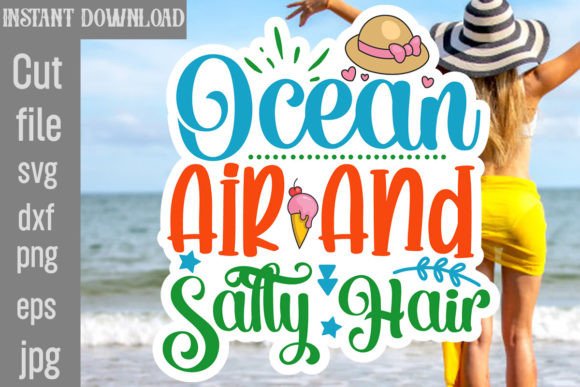
The design immediately evokes a relaxed, coastal vibe. It captures that specific feeling of a beach day where the wind messes up your hair but you do not care because the air smells like salt and sunscreen. For an embroidery project, this mood is crucial. You are not just selling a stitch pattern; you are selling a lifestyle. The layout appears balanced, with a mix of script and structural elements that suggest movement. However, as an experienced reviewer, I look for potential pitfalls in these flowing shapes. Script fonts and organic curves can be tricky in embroidery if the digitizing is not precise. Thin connections between letters can break during washing, and overly dense areas can cause puckering. My first step was to inspect the paths in the provided formats to gauge how they might behave when converted into stitches.
Real-World Application: From Screen to Stitch
To truly evaluate the Ocean Air and Salty Hair SVG Cut File, I imagined it in several common commercial scenarios. Let us say you are preparing a custom order for a local boutique. They want a line of summer tote bags. This design fits naturally here. A canvas tote bag design benefits from bold, clear imagery. If the SVG paths are clean, the resulting satin or fill stitches will sit well on the textured weave of canvas. I visualized this on a natural cotton tote, using teal and sandy beige thread colors to enhance the coastal theme. The contrast would be high, ensuring readability from a distance, which is vital for retail displays.
Another strong candidate is sweatshirt embroidery. Here, the stakes are higher. Sweatshirt fleece is thick and plush. If the design has too much detail or insufficient underlay, it will sink into the fabric and become illegible. I would recommend testing this design on a scrap piece of fleece first. If the lettering is thin, you might need to adjust the stitch width or choose a heavier weight thread to ensure the "Salty Hair" text pops against the fuzzy background. For a personalized gift, such as a matching family vacation shirt, this design works well because it is thematic without being overly specific to a date or location, making it versatile for various customers.
Technical Considerations for Crafters
While the aesthetic is appealing, we must discuss the technical realities of working with this file. The product description mentions it comes in SVG, DXF, EPS, PNG, and JPEG formats. This is standard for Crafts and Graphics, but as an embroiderer, you need to be careful. SVG and DXF are cut files, not necessarily embroidery files. Unless the seller explicitly states that this is a pre-digitized machine embroidery design with stitch data (like PES or DST), you will likely need to use embroidery software to convert these vector paths into stitches. This is a critical distinction. If you are an Etsy seller looking for a quick drag-and-drop solution, verify the file types carefully. If you are a digitizer, these vector formats are excellent starting points because they allow you to control every aspect of the stitch density and direction.
When converting or reviewing the digitization, pay close attention to the corners and curves. Sharp angles in the "Ocean Air" text could cause thread breaks if the machine turns too quickly. A good digitizer will add micro-stitches or adjust the angle to smooth these transitions. Also, consider the hoop size. If you are stitching this on a cap, you are limited by the curved surface and the smaller hoop area. You may need to resize the design, which can distort thin lines. Always test resized versions on scrap fabric to ensure the proportions remain visually pleasing.
Fabric and Stabilizer Strategy
The success of any embroidery file depends heavily on the substrate. For this coastal design, I recommend avoiding highly stretchy fabrics unless you are an advanced user. Stretchy knits can distort the lettering, making "Salty Hair" look wavy in an unintended way. Instead, opt for stable cottons, poly-cotton blends, or canvas. If you must use a stretchy fabric for a t-shirt, a high-quality cut-away stabilizer is non-negotiable. It provides the necessary support to keep the stitches flat and prevent the fabric from pulling around the design edges.
For textured fabrics like towels or linen, the fabric texture can interfere with fine details. In these cases, a topping stabilizer can help the needle penetrate smoothly and keep the threads sitting on top of the loops rather than sinking in. This is particularly important for maintaining the clarity of the script elements in the design.
Commercial Viability and Brand Consistency
For small business owners and craft business operators, consistency is key. The Ocean Air and Salty Hair SVG Cut File offers a cohesive look that can be part of a larger summer collection. Imagine pairing this with other nautical elements like anchors, shells, or waves. This creates a recognizable brand aesthetic. When customers see this style, they associate it with quality and theme. Using high-resolution printable mockup images in your online listings can help visualize this, but nothing beats photos of the actual stitched item. Show the texture of the threads, the sheen of the rayon or polyester, and the neatness of the backing.
Customer trust is built on the quality of the handmade product. If the design stitches out cleanly, with no loose threads or gaps, it reflects professionalism. Conversely, if the design is poorly digitized and causes frequent thread breaks, it wastes your time and materials. This is why I always advise running a test stitch-out before committing to a large batch of custom apparel or holiday embroidery orders. Check the back of the sample as well; a messy back often indicates tension issues that could lead to durability problems after washing.
Final Verdict and Designer Notes
The Ocean Air and Salty Hair SVG Cut File is a strong contender for summer-themed projects, provided you approach it with the right technical preparation. It is not just a graphic; it is a component of a tangible product. Whether you are creating an embroidered patch for a surf shop or a baby embroidery item for a seaside nursery, the design’s success lies in the execution.
- Test First: Always stitch on scrap fabric identical to your final material.
- Check Licensing: Confirm if the license allows for commercial sales of finished physical items.
- Contrast Matters: Ensure your thread colors stand out against the fabric background.
- Stabilize Properly: Match your stabilizer to the fabric weight and stretch.
In the world of commercial embroidery and small shop product creation, attention to detail separates the amateurs from the professionals. This design has the potential to be a bestseller if treated with respect for the medium. By understanding the interplay between the vector paths, the stitch formation, and the fabric choice, you can create a finished product that not only looks good but feels durable and valuable to the end customer. Keep your needles sharp, your tensions balanced, and your creative vision clear.